Back to Projects

Bandhavgarh Animals

A first website about the wildlife of Bandhavgarh National Park.

11
Animals
1
National Park
1
First HTML site
National Park · India

Bandhavgarh Animals

The Story

Bandhavgarh National Park in Madhya Pradesh has one of the highest densities of Bengal tigers in India, but it is also home to leopards, wild boars, sloth bears, and many kinds of deer. This site is my first website — a guide to eleven animals you might spot there, with a picture and a short story about each one.

Bengal Tiger
Bengal Tiger

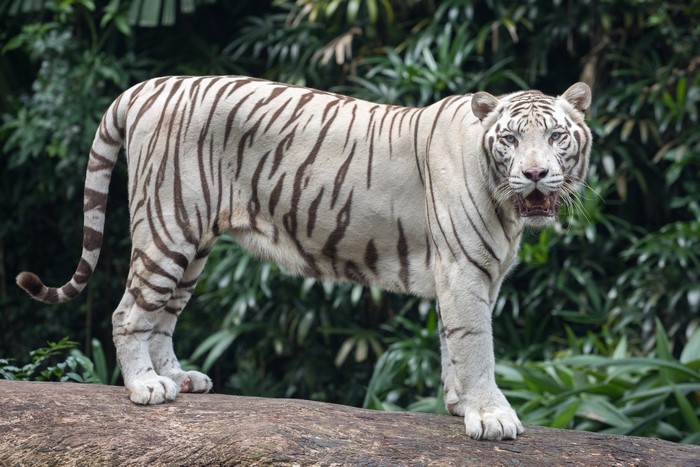
The Bengal tiger is a population of the Panthera tigris tigris subspecies. It ranks among the largest of wild cats. It is distributed from India, southern Nepal, Bangladesh, Bhutan to Southwestern China. Its historical range extended to the Indus Basin until the early 19th century. It is threatened by poaching, habitat loss and habitat fragmentation.

Males and female Bengal tigers in Panna Tiger Reserve reach a head-to-body length of 183–211 cm and 164–193 cm respectively, including a tail about 85–110 cm long. Subadult males weigh between 130 and 170 kg and reach 200–260 kg when adult. Two male tigers captured in Chitwan National Park in the 1980s exceeded weights of 270 kg and are the largest free-ranging tigers reported to date.

As of 2022, the Bengal tiger population was estimated at 3,167–3,682 individuals in India, 316–355 in Nepal, 131 in Bhutan and around 125 in Bangladesh. It is the national animal of India.
Leopard
Leopard

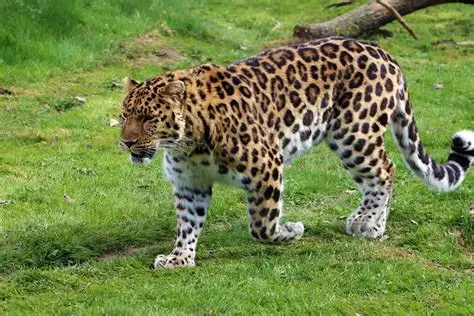
The leopard (Panthera pardus) is one of the five extant cat species in the genus Panthera. It has a pale yellowish to dark golden fur with dark spots grouped in rosettes. Its body is slender and muscular, reaching a length of 92–183 cm with a 66–102 cm long tail and a shoulder height of 60–70 cm. Males typically weigh 30.9–72 kg, and females 20.5–43 kg.

The leopard initially evolved in Africa during the Early Pleistocene, before migrating into Eurasia. Today, eight subspecies are recognised in its wide range in Africa and Asia. The leopard is adapted to a variety of habitats ranging from rainforest to steppe. It is an opportunistic predator, hunting mostly ungulates and primates. It relies on its spotted pattern for camouflage as it stalks and ambushes its prey, which it sometimes drags up a tree.

Listed as Vulnerable on the IUCN Red List, leopard populations are currently threatened by habitat loss and fragmentation, and are declining in large parts of the global range.

Golden Jackal
Golden Jackal

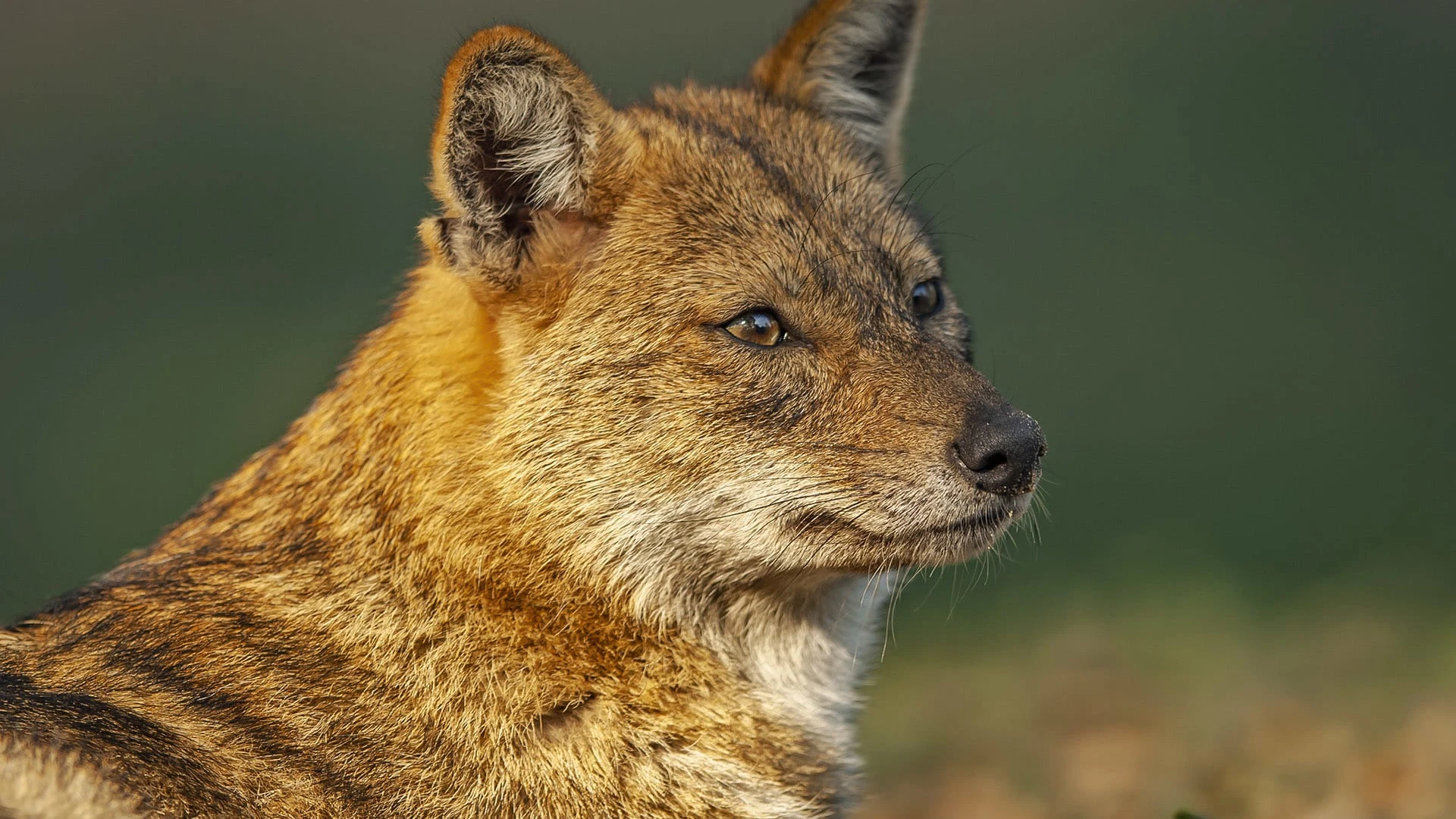
The golden jackal (Canis aureus), also called the common jackal, is a wolf-like canid that is native to Eurasia. The golden jackal's coat varies in color from a pale creamy yellow in summer to a dark tawny beige in winter. It is smaller and has shorter legs than the Arabian wolf. It is listed as Least Concern on the IUCN Red List due to its widespread distribution and high density in areas with plenty of available food and optimum shelter.

Despite its name, the golden jackal is not closely related to the African black-backed jackal. It is instead closer to wolves and coyotes. Genetic studies indicate that the golden jackal expanded from India around 20,000 years ago.

The golden jackal is abundant in valleys and beside rivers, canals, lakes, and seashores. It is a social species, the basic social unit of which consists of a breeding pair and their young. It is very adaptable, with the ability to exploit food ranging from fruit and insects to small ungulates.

Striped Hyena
Striped Hyena

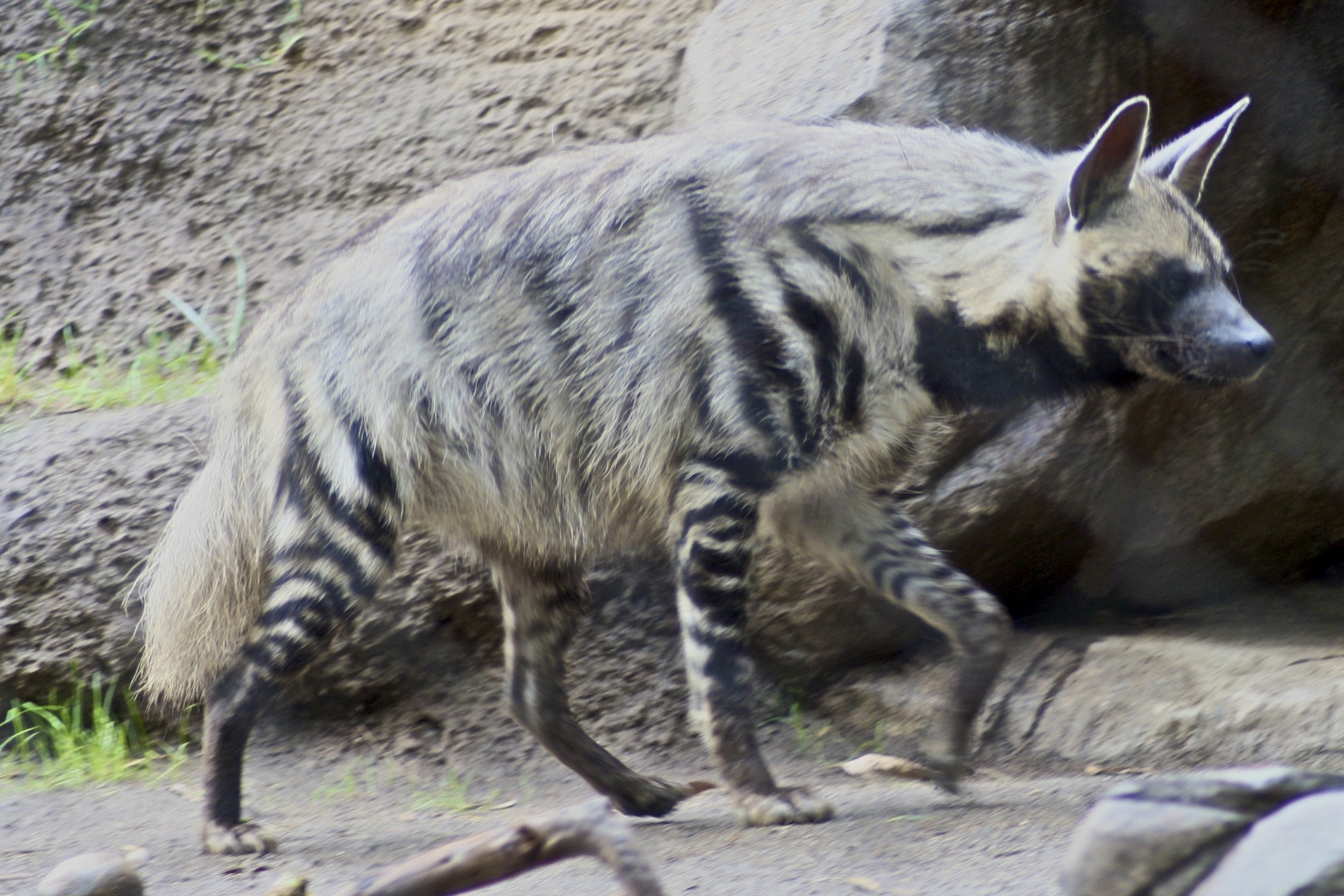
The striped hyena (Hyaena hyaena) is a species of hyena native to North and East Africa, the Middle East, the Caucasus, Central Asia, and the Indian subcontinent. It is the only extant species in the genus Hyaena. It is listed by the IUCN as near-threatened, as the global population is estimated to be under 10,000 mature individuals.

It is the smallest of the bone-cracking hyenas and retains many primitive viverrid-like characteristics. Though primarily a scavenger, large specimens have been known to kill their own prey. The striped hyena is a monogamous animal, with both males and females assisting one another in raising their cubs. A nocturnal animal, the striped hyena typically only emerges in complete darkness.

The striped hyena features prominently in Middle Eastern and Asian folklore. It is the national animal of Lebanon.

Sloth Bear
Sloth Bear

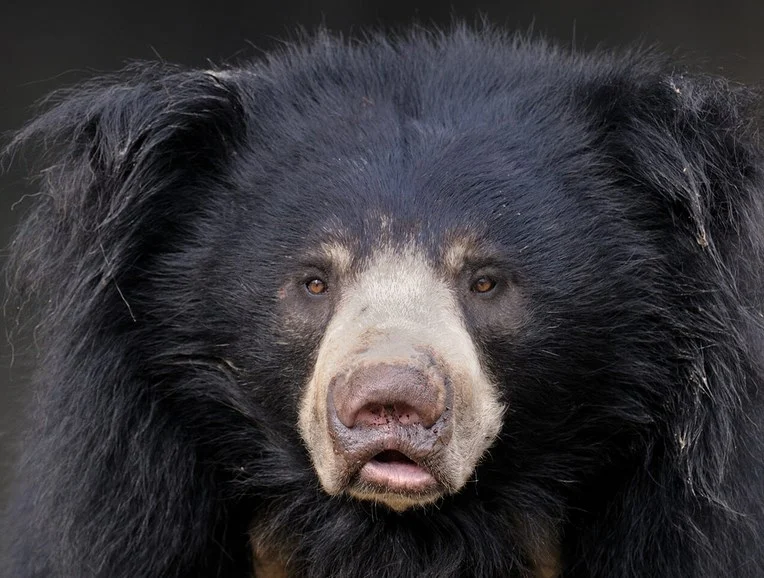
The sloth bear (Melursus ursinus), also known as the Indian bear, is a myrmecophagous bear species native to the Indian subcontinent. It feeds on fruits, ants and termites. It is listed as vulnerable on the IUCN Red List, mainly because of habitat loss and degradation. It is the only species in the genus Melursus.

It has also been called "labiated bear" because of its long lower lip and palate used for sucking up insects. It has long, shaggy fur, a mane around the face, and long, sickle-shaped claws. It is lankier than brown and Asian black bears.

Sloth bears breed during spring and early summer and give birth near the beginning of winter. The typical weight range for females is from 55 to 105 kg, and for males is from 80 to 145 kg. They are 60–92 cm high at the shoulder, and have a body length of 1.4–1.9 m.

Indian Wolf
Indian Wolf

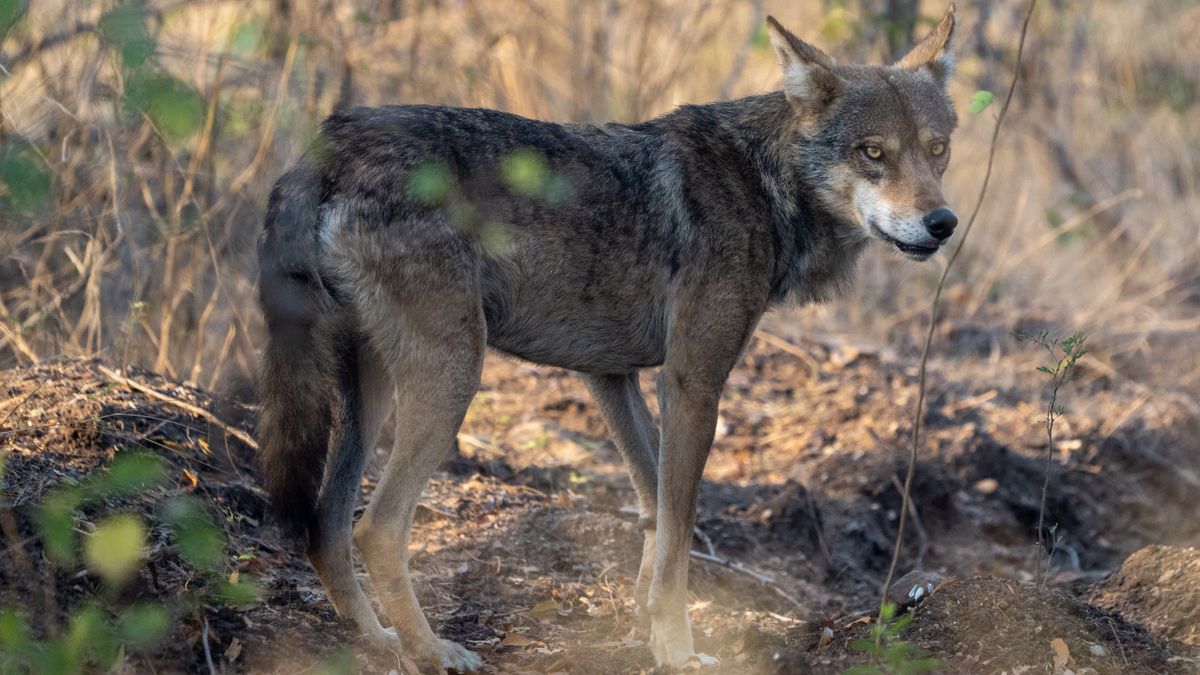
The Indian wolf (Canis lupus pallipes) is a subspecies of gray wolf that ranges from Southwest Asia to the Indian subcontinent. It is intermediate in size between the Himalayan wolf and the Arabian wolf, and lacks the former's luxuriant winter coat due to it living in warmer conditions. Within this subspecies, the "Indian plains wolf" is genetically basal to all other extant Canis lupus apart from the older-lineage Himalayan wolf.

The Indian wolf travels in smaller packs and is less vocal than other variants of the gray wolf, and has a reputation for being cunning. The Indian wolf is one of the most endangered populations of gray wolf in the world.

In 2022, whole-genome sequencing estimated that the distinct gray wolf lineage living in the semi-arid lowland region of the Indian subcontinent diverged from other gray wolf populations around 110,000 years ago.

Chital Deer
Chital Deer

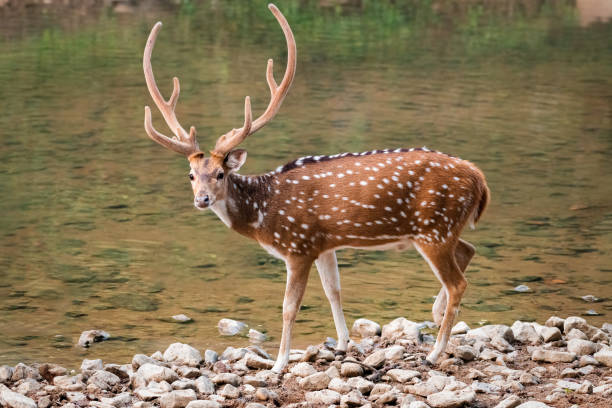
The chital (Axis axis), also called spotted deer and axis deer, is a deer species native to the Indian subcontinent. A moderate-sized deer, male chital reach 90 cm and females 70 cm at the shoulder. While males weigh 70–90 kg, females weigh around 40–60 kg. It is sexually dimorphic; males are larger than females, and antlers are present only on males.

The upper parts are golden to rufous, completely covered in white spots. The abdomen, rump, throat, insides of legs, ears, and tail are all white. The antlers, three-pronged, are nearly 1 m long. A conspicuous black stripe runs along the spine.

The chital may be confused with the fallow deer. Chital have several white spots, whereas fallow deer usually have white splotches. The biggest distinction is the dark brown stripe running down the chital's back.

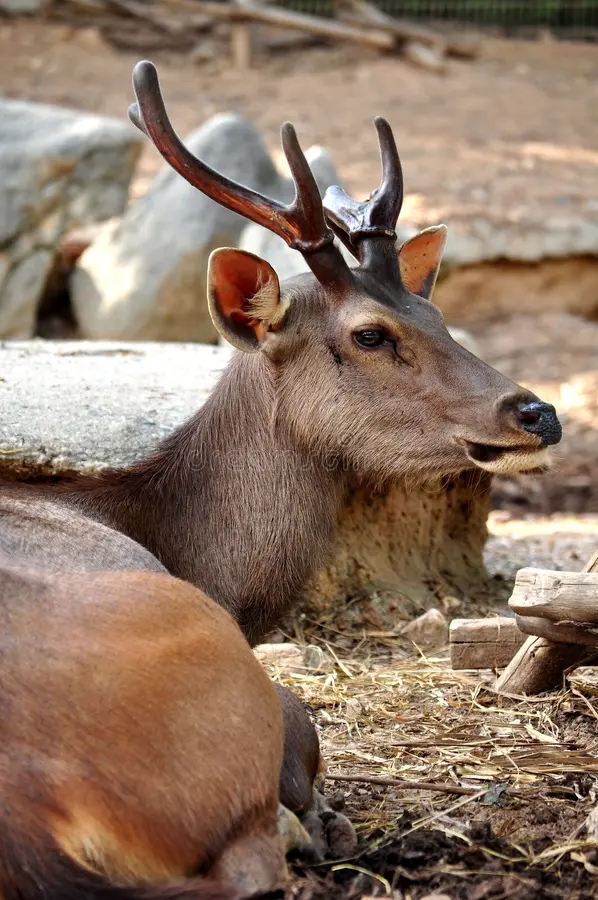
Sambar Deer
Sambar Deer

The sambar deer (Rusa unicolor) is a large deer species native to the Indian subcontinent, South China, and Southeast Asia. They are characterized by their impressive size, with adult males typically standing 102–160 cm at the shoulder and weighing between 100–180 kg. Their coat is coarse, shaggy, and dark brown, providing excellent camouflage within the forests they inhabit.

Sambar are nocturnal or crepuscular. The males live alone for much of the year, and the females live in small herds of up to 16 individuals. They often congregate near water, and are good swimmers.

The sambar deer is the favourite prey of the Bengal tiger and Asiatic lion. In India, the sambar can comprise up to nearly 45% of the biomass consumed by the Bengal tiger. The tiger is said to even mimic the call of the sambar to deceive it while hunting.

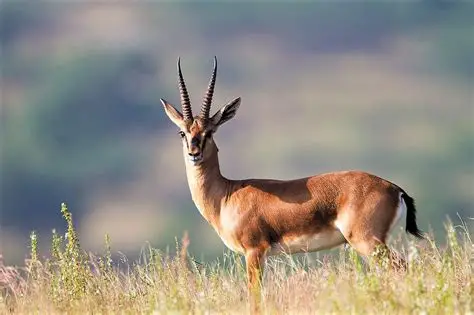
Chinkara
Chinkara

The chinkara (Gazella bennettii), also known as the Indian gazelle, is a gazelle species native to India, Iran, Afghanistan and Pakistan. It stands at 65 cm tall and weighs about 23 kg. The chinkara has a reddish-buff summer coat with smooth, glossy fur. The sides of the face have dark chestnut stripes from the corner of the eye to the muzzle, bordered by white stripes.

Chinkara are swift and agile, with nocturnal feeding habits. They are browsers and consume leaves and grasses. They are observed alone or in groups of three, including mother and offspring. Sometimes groups of 8 to 10 individuals are observed.

Chinkaras are preyed upon by Indian leopards, Bengal tigers, Asiatic lions and dholes. The chinkara is listed as least concern on the IUCN Red List. It occurs in over 80 protected areas in India.

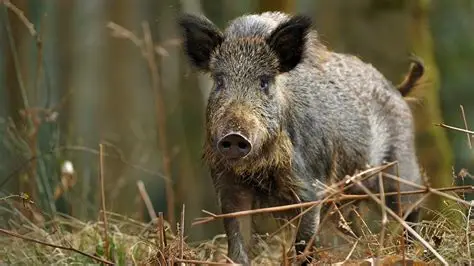
Wild Boar
Wild Boar

The wild boar (Sus scrofa), also known as the wild swine, common wild pig, Eurasian wild pig, or simply wild pig, is a suid native to much of Eurasia and North Africa, and has been introduced to the Americas and Oceania. The species is now one of the widest-ranging mammals in the world. It has been assessed as least concern on the IUCN Red List due to its wide range, high numbers, and adaptability to a diversity of habitats.

Wild boars probably originated in Southeast Asia during the Early Pleistocene and outcompeted other suid species as they spread throughout the Old World.

The species lives in matriarchal societies consisting of interrelated females and their young. Fully grown males are usually solitary outside the breeding season. The wolf is the wild boar's main predator in most of its natural range except in the Far East and the Lesser Sunda Islands, where it is replaced by the tiger and Komodo dragon respectively.

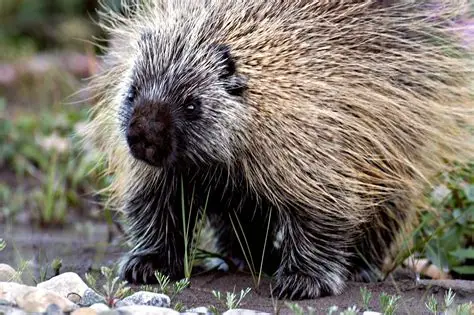
Porcupine
Porcupine

Porcupines are large rodents with coats of sharp spines, or quills, that protect them against predators. The term covers two families of animals: the Old World porcupines in the family Hystricidae, and the New World porcupines in the family Erethizontidae. Both families display superficially similar coats of rigid or semi-rigid quills, which are modified hairs composed of keratin.

The Old World porcupines live in Italy, West and South Asia, and most of Africa. They are large, terrestrial, and strictly nocturnal. New World porcupines are indigenous to North America and northern South America. They live in wooded areas and can climb trees.

Most porcupines are about 60–90 cm long, with a 20–25 cm long tail. Weighing 5–16 kg, they are rounded, large, and slow. Porcupines have various methods to defend themselves from predators, the most prominent being the use of their quills.

Hand-coded with HTML and CSS · Jihaan · Class 5

Want to build your first website too?

Pick a topic you love and start with HTML and CSS — just like Jihaan did.

Get Started